
Battery storage for retrofitting for PV and wind
How asset owners can stabilize revenues, reduce risks, and unlock new value potentials in the post-EEG era
The energy transition is not only bringing forth new technologies; it is also reshaping the economic reality of many PV and wind sites. Expiring EEG feed-in tariffs, increasing hours of negative prices, and volatile markets confront operators and asset owners with key questions: How can profitability be secured? How can assets remain future-proof? What new models are emerging?
This is precisely where retrofit storage solutions open up new possibilities. Battery storage systems not only turn volatile generation into predictable revenues—they also use the same grid connection point as the existing PV or wind installation to market additional electricity when the renewable asset itself is not feeding in. This creates an expanded revenue model: The existing plant generates green electricity, while the storage system complements its marketing with added flexibility and uses available feed-in capacity to capture economic opportunities. In the post-EEG era, storage thus becomes a strategic instrument for placing PV and wind sites on a stable economic footing and significantly increasing their value creation.
Flexibility as a strategic lever for the future of PV and wind
Battery storage systems are increasingly regarded as a key technology for securing the economic future of existing assets. They enable asset owners to strategically enhance existing PV and wind sites.
But what does “flexibility” actually mean?
Flexibility describes the ability to avoid feeding electricity into the grid at the exact moment it is generated and instead shift it in time or deliver it precisely when the market or the grid derives the greatest benefit. Renewable assets such as PV and wind are inherently inflexible—they produce electricity when sun and wind are available, regardless of demand or price.
This is exactly where battery storage systems come in: they turn weather-dependent generation into a controllable, flexibly deployable energy resource. This unlocks new revenue models, reduces risks, and allows existing assets to be operated more economically and more stably—especially in the post-EEG era.
- Mitigating price risks, particularly in connection with §51 EEG (no remuneration during negative prices)
- Marketing surplus electricity in a targeted, time-shifted manner
- Multi-market participation in the power market, generating additional revenues alongside PV and wind
- Reducing portfolio risks
- Stabilizing cash flows over the long term
Above all, the combination of falling storage prices, the digitalization of energy trading, rising demand in the German power market for “flexibility through energy storage,” and new regulatory opportunities (§8/§8a EEG cable pooling and grid overbuild) makes storage economically attractive today from the perspective of a PV or wind park owner.
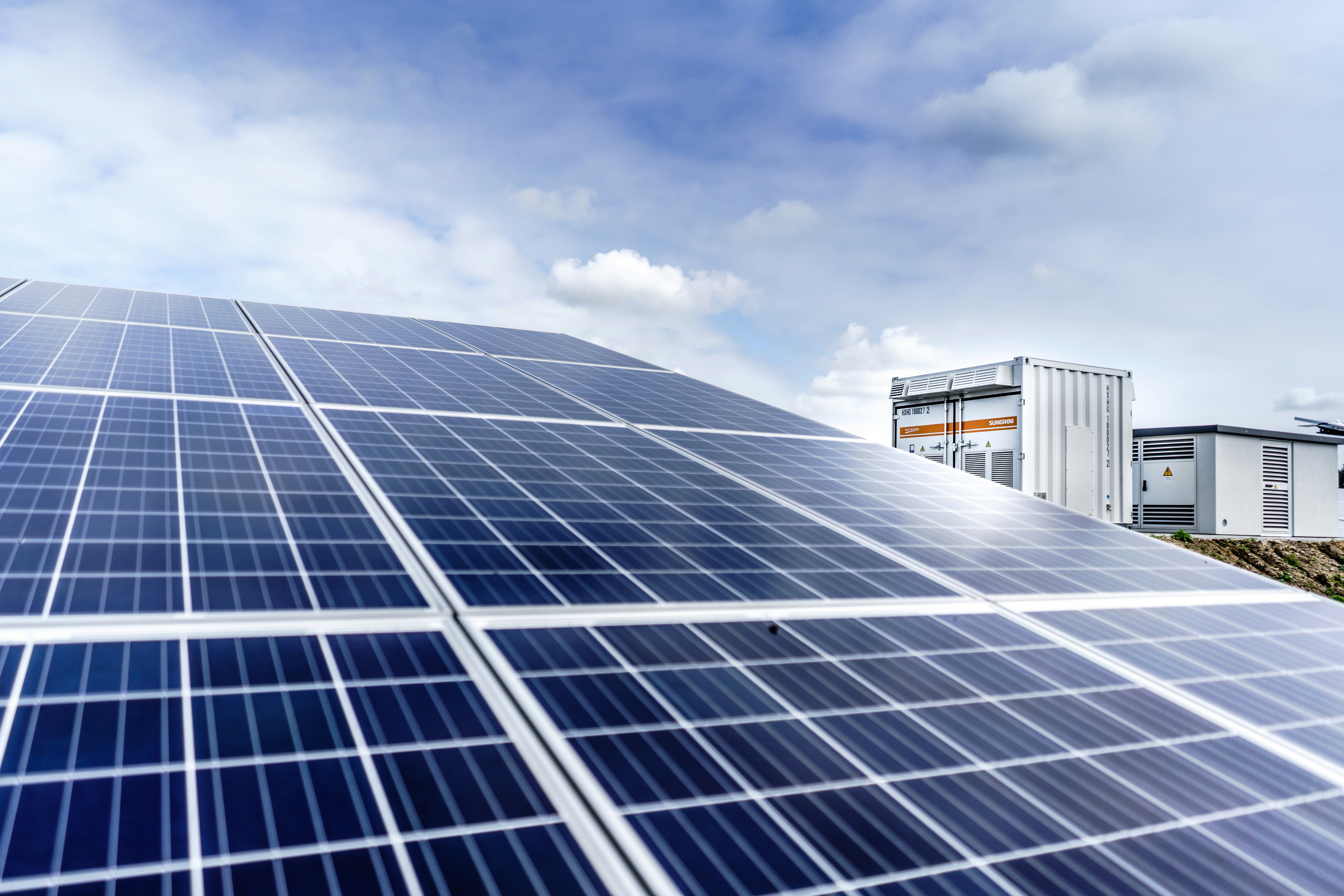
Battery storage retrofits as a smart flexibility component for existing PV sites.
Four action areas for strategic value creation
1. Revenue sources and growth
- Shifting PV and wind power to more profitable hours
- Additional revenues through arbitrage and intraday trading
- Combining direct marketing with PPA models
- Co-location of storage to increase site returns
2. Unlocking value potential
- Reducing remuneration losses during negative price periods (§51 EEG)
- Stabilizing cash flows despite market fluctuations
- Using storage as a complement in repowering scenarios
- Portfolio optimization through flexible assets
3. Leveraging the opportunities of digital transformation
- Intelligent storage optimization through algorithms, AI, and trading desks
- Digital operating strategies for optimal generation timing
- Smart dispatch in co-location concepts
- More precise forecasting for marketing and portfolio management
4. Future readiness through resilience
- More robust business models in volatile markets
- Energy storage as a buffer against regulatory and price risks
- Technical stabilization of the grid connection
- Attractive asset valuations through flexible operating models
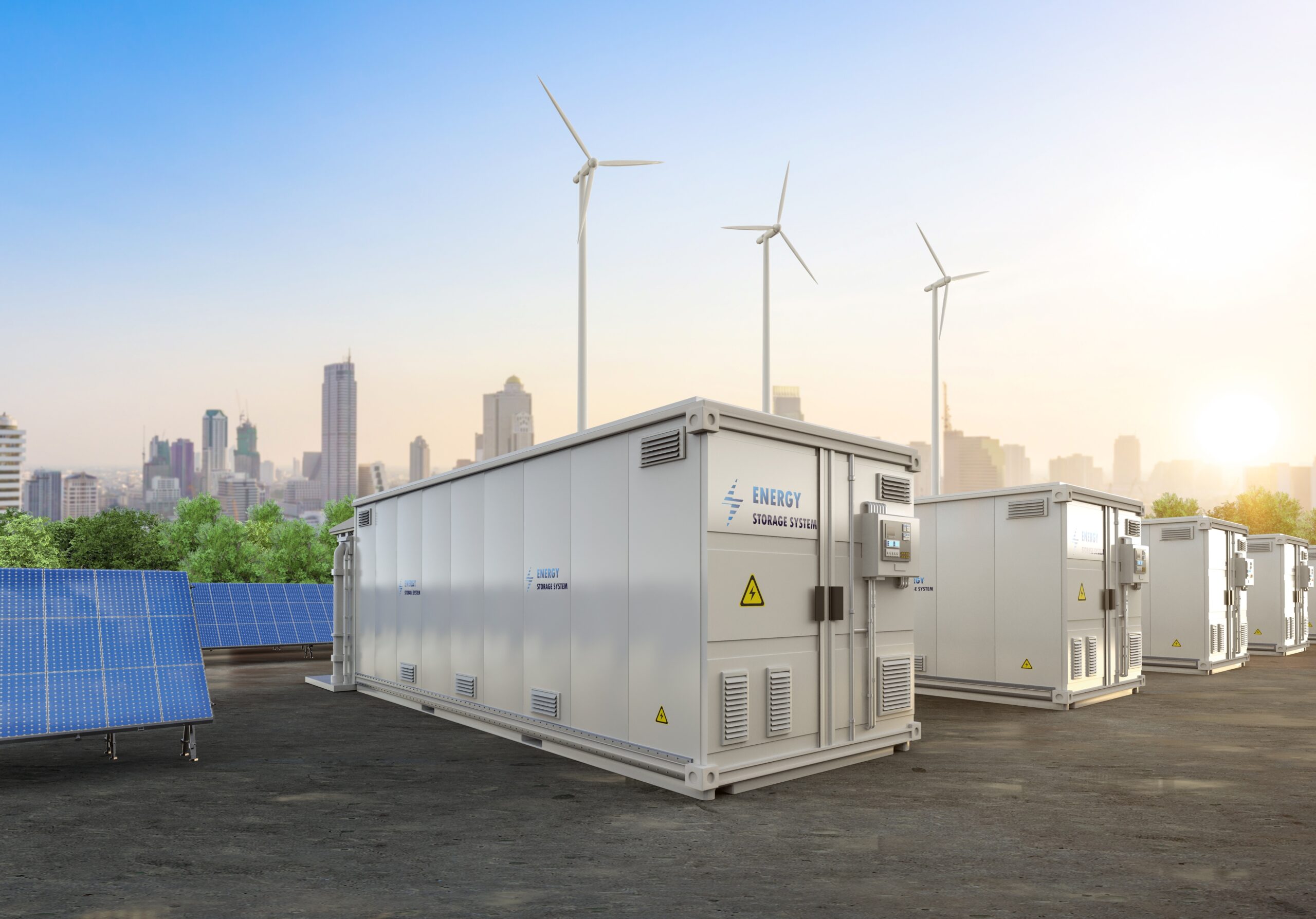
Battery storage as a strategic complement for modern wind farms.
From potential to implementation – pragmatic, economical, and effective in the market
Many operators recognize that battery storage systems today are more than a “technical add-on.” They are a strategic instrument for securing the long-term profitability of existing assets.
In practice, however, questions often arise: What storage size is appropriate? Which revenues are realistic? Which regulatory options apply? How does the marketing work in concrete terms?
EARLY BRANDS supports these decisions in a coordinated, conceptual manner with an implementation-oriented approach that delivers clear results within a few weeks:
- Site analysis and assessment of economic potential
- Financial scenarios and IRR models
- Advantageous marketing concepts
- Scalable implementation – individually per site or across the portfolio
As an independent partner and co-pilot, we guide you all the way to implementation planning, including coordination of grid and construction permits, tenders for project development and EPC, and ultimately operational deployment.
Our experience from developing large BESS projects (>100 MW), co-location PV/wind sites, and working with municipal utilities shows that the decisive factors are the combination of economic viability, regulatory clarity, and pragmatic implementation with strong partners.
Shaping the future proactively
The energy future of PV and wind sites is not decided in the market—it is decided by their owners. Those who factor in storage today can stabilize asset profitability, unlock new revenue streams, and create long-term investor perspectives.
EARLY BRANDS contributes experience from large-scale storage projects, post-EEG strategies, and active participation in expert committees such as the German Energy Storage Association (BVES) and the Association of Municipal Enterprises (VKU).
In addition, we incorporate our project experience with municipal utilities and city-owned energy suppliers, with asset owners of large PV and wind portfolios, as well as from investment and development projects for battery storage together with family offices and institutional investors.
Together, we develop storage solutions that are economically viable, regulatorily sound, and technically robust.
Catch the Future…!

-
Share
